
How Blockchain Technology Is Powering the Renewable Energy Revolution: From Biogas Innovation to Crypto Casinos in the UK
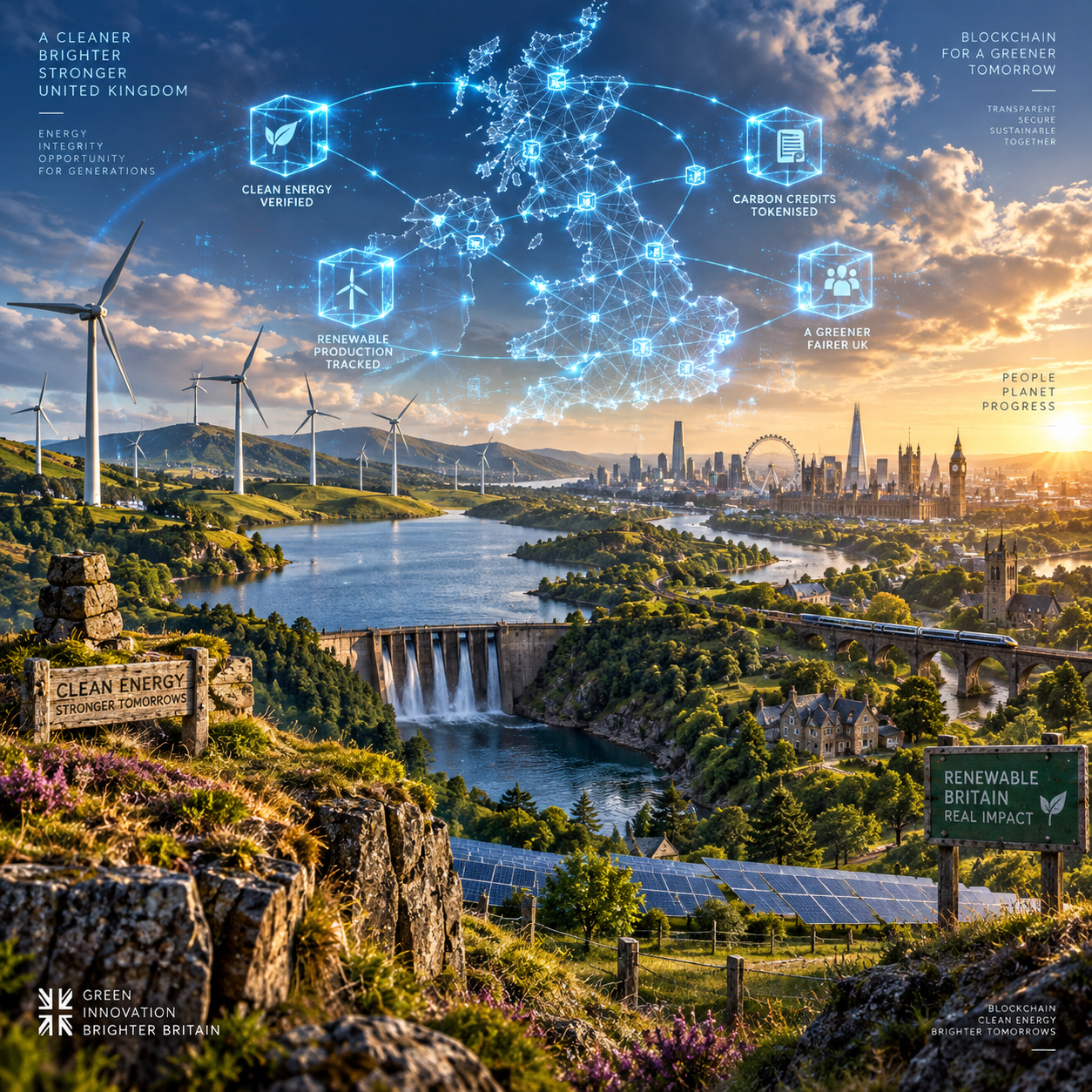
I've spent a good chunk of the past year tracking how blockchain keeps popping up in places you wouldn't expect—energy co-ops in Yorkshire, biogas start-ups in rural England, even payment rails behind online gambling platforms. The UK has quietly become one of the more interesting testing grounds for green tech innovation, and blockchain sits right at the centre of that story. It's a technology that's earned a somewhat mixed reputation, largely because of its association with energy-hungry applications like cryptocurrency mining and high-traffic digital platforms. Yet the same distributed ledger tech is also underpinning some genuinely promising climate solutions, including small-scale biogas projects that flip the narrative on its head. So the question worth asking is this: can blockchain really be both an energy consumer and a climate solution at the same time? I think the answer is more nuanced than most headlines suggest.
What Is Blockchain's Role in the Energy Sector?
At its core, blockchain is just a shared, tamper-resistant ledger. Transactions get recorded across a network of computers rather than a single central server, which means no one party controls or can quietly alter the data. That sounds abstract until you apply it to energy markets, where transparency and trust have historically been in short supply. Utilities, regulators, and consumers all need to verify who produced what energy, when, and where it went—and blockchain happens to be remarkably good at that kind of record-keeping.
This is why energy companies across the UK and Europe have started experimenting with blockchain for things like tracking renewable energy certificates, verifying carbon offsets, and managing decentralized grids without a single point of failure. It removes a lot of the middleman friction that used to slow down energy trading.
From Cryptocurrency Mining to Smart Grids
Blockchain's original claim to fame was digital currency, and that association still colors public perception. But the technology has moved well beyond mining rigs. Peer-to-peer energy trading platforms now use blockchain to let households buy and sell surplus solar power directly. Carbon credit tracking systems use it to prevent double-counting of offsets. Smart grid operators use it to balance supply and demand in near real-time across thousands of distributed nodes. None of this requires the kind of brute-force computation that made early cryptocurrency mining so notorious for its electricity use.
The Energy Debate: Blockchain's Double-Edged Sword
Still, it would be dishonest to pretend the criticism is baseless. Proof-of-work cryptocurrencies like Bitcoin genuinely consume enormous amounts of electricity, and that reputation has stuck to blockchain broadly, fairly or not. High-traffic platforms that rely on blockchain infrastructure for constant transaction verification—payment processors, gaming platforms, and yes, online gambling sites—add to that energy demand, even if their individual footprint is smaller than mining operations.
Why Crypto Platforms Draw Environmental Scrutiny in the UK
UK-based gambling platforms that accept digital currency have grown substantially in popularity over the past few years, and their blockchain-based payment systems have started raising eyebrows among sustainability advocates. Every transaction processed through a distributed ledger requires computing power somewhere, and when you scale that across thousands of daily users on crypto casinos, the cumulative energy draw becomes a legitimate talking point. It's not that these platforms are uniquely villainous—it's that they've become a visible symbol of blockchain's energy costs, which sets up an important transition: if digital platforms are creating demand, what's supplying the clean energy to offset it?
Biogas Innovation: A Green Counterbalance to Blockchain's Energy Demand
This is where biogas enters the picture, and honestly, it's the part of this story I find most encouraging. Biogas is produced by breaking down organic waste—food scraps, agricultural residue, manure—in an oxygen-free environment, releasing methane that can be captured and converted into electricity or heat. It's renewable, it's scalable, and critically, it can be produced at a small enough scale to serve individual communities rather than requiring massive centralized infrastructure.
Projects like micro4biogas.eu are pioneering exactly this kind of micro-scale biogas production, converting organic waste into clean, usable energy on a local level. What's interesting is how this model could plug directly into the digital economy's energy needs. Renewable partnerships between biogas producers and energy-intensive digital platforms—including blockchain-based services—offer a realistic path toward offsetting the very footprint that draws so much criticism. Rather than treating clean energy and digital infrastructure as opposing forces, this approach treats them as complementary pieces of the same grid.
How Micro-Biogas Plants Work
The mechanics are refreshingly straightforward. Organic waste gets fed into an anaerobic digester, microorganisms break it down over several weeks, and the resulting biogas gets captured and either burned for heat or converted into electricity via a generator. What makes micro-scale versions particularly appealing for rural UK communities is their footprint—they don't require the land or capital investment of industrial biogas facilities, which makes them viable for farms, small villages, or even individual households with enough organic waste to feed the system.
Excess energy generated by these micro-plants can be fed back into local grids, the same grids that might also be powering data centers, payment processors, or blockchain nodes nearby. It's a small-scale solution, but multiplied across hundreds of rural communities, the cumulative impact on grid sustainability becomes significant.

Blockchain-Enabled Renewable Energy Projects in the UK
Beyond biogas, there's a growing list of UK initiatives using blockchain specifically to accelerate renewable energy adoption. Several pilot programs have used distributed ledgers to verify carbon offset claims with far more rigor than traditional paper-based systems allowed, cutting down on fraudulent or duplicated credits. Others use blockchain to manage decentralized microgrids, allowing communities to generate, store, and distribute their own renewable power without relying entirely on national infrastructure.
Peer-to-Peer Renewable Energy Trading Platforms
One of the more tangible applications I've come across involves households with solar panels selling surplus energy directly to their neighbors, using blockchain smart contracts to automate the transaction and settlement process. Instead of feeding excess power back to a utility company at a fixed, often low rate, homeowners can trade directly on a peer-to-peer basis. Several UK startups have piloted this model in smaller communities, and while it's still early days, the concept demonstrates blockchain's capacity to decentralize not just financial systems but energy markets themselves.
Best Practices for Sustainable Blockchain Adoption
For businesses and platforms—crypto-based services included—looking to reduce their environmental impact, there are a few practical steps worth considering:
- Source electricity from renewable providers wherever data centers or blockchain nodes are hosted.
- Invest directly in offset projects like micro-biogas plants rather than relying solely on carbon credit purchases.
- Adopt proof-of-stake consensus protocols instead of proof-of-work, which can cut energy consumption by well over 90 percent.
- Partner with local renewable energy initiatives to create closed-loop energy systems.
- Publish transparent energy usage reports so customers and regulators can track genuine progress.
Common Mistakes to Avoid When Evaluating Blockchain's Environmental Impact
One misconception I run into constantly is the assumption that all blockchain applications carry the same energy footprint. A proof-of-work cryptocurrency mining operation and a proof-of-stake smart contract platform are worlds apart in terms of consumption, yet they often get lumped together in public discourse. Another mistake is ignoring blockchain's potential upside—its ability to verify renewable energy production, track carbon offsets accurately, and even help finance biogas projects through transparent, decentralized funding mechanisms. Painting the entire technology with one brush overlooks the genuine climate solutions it's helping to build.
Conclusion
Blockchain is, without question, a dual-purpose technology. It can power energy-intensive platforms that draw legitimate environmental scrutiny, and in the same breath, it can underpin some of the most promising renewable energy solutions the UK has seen in years. Micro-biogas plants, peer-to-peer solar trading, and blockchain-verified carbon offsets all point toward a future where digital infrastructure and sustainability aren't at odds. I'd encourage anyone forming an opinion on this topic to look past the headlines about energy consumption and consider the fuller picture—one where innovation, from small rural biogas digesters to smart energy grids, is quietly reshaping what a sustainable UK energy future could look like.
